
Human & System Coupling
When intervention becomes internal to the system

This article is part of the *Structural Counterforce Framework* series.
To understand the full context, see the [Table of Contents].

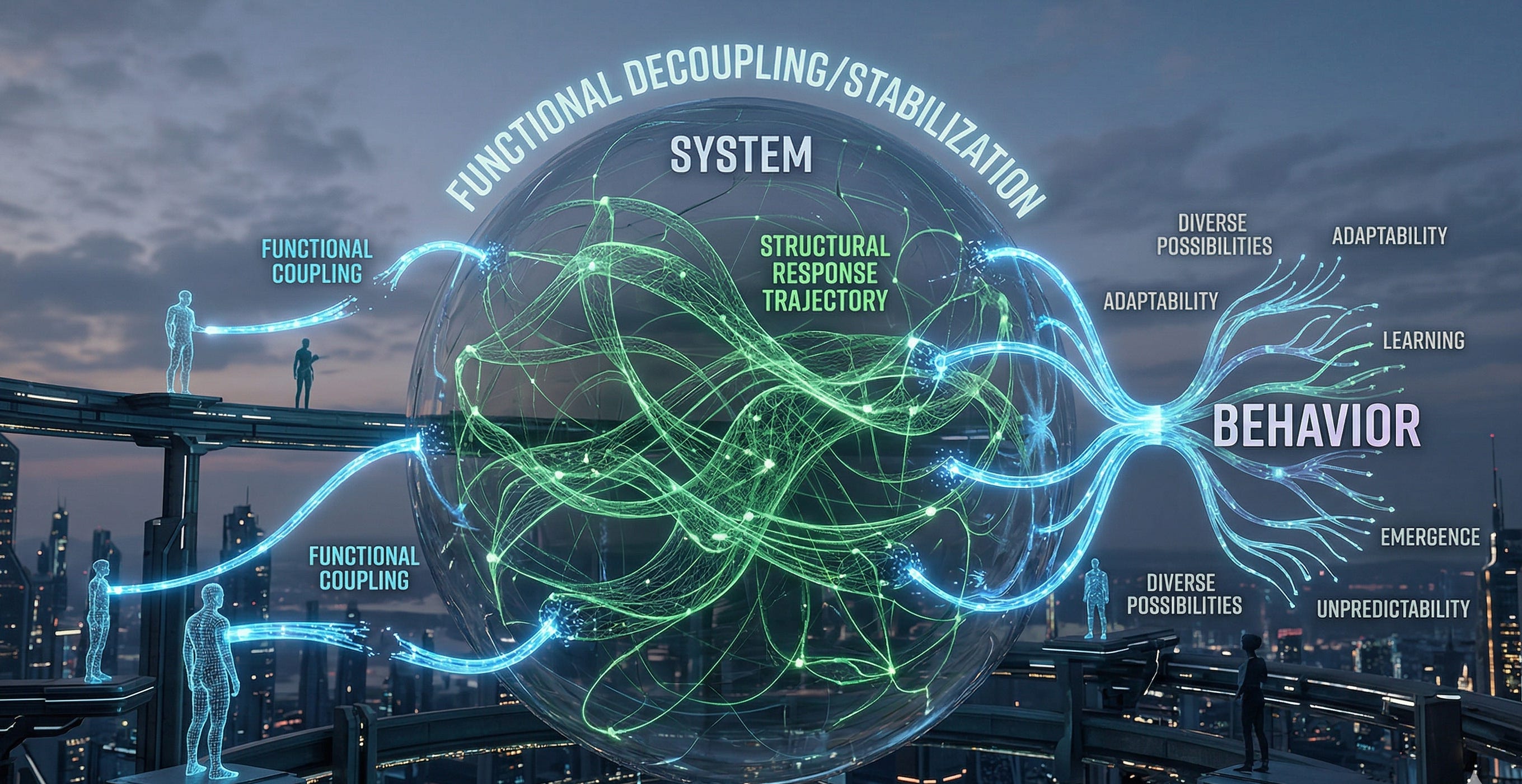
Human intervention is not external to the system.
It is a perturbation inside its dynamics.
And most systems are not built to absorb it.
1. Breaking the Assumption: Intervention Is Not “Outside”
We tend to think about systems in a familiar way:
Human is the controller. System is the controlled.
One side commands. The other executes.
A clear, separated relationship.
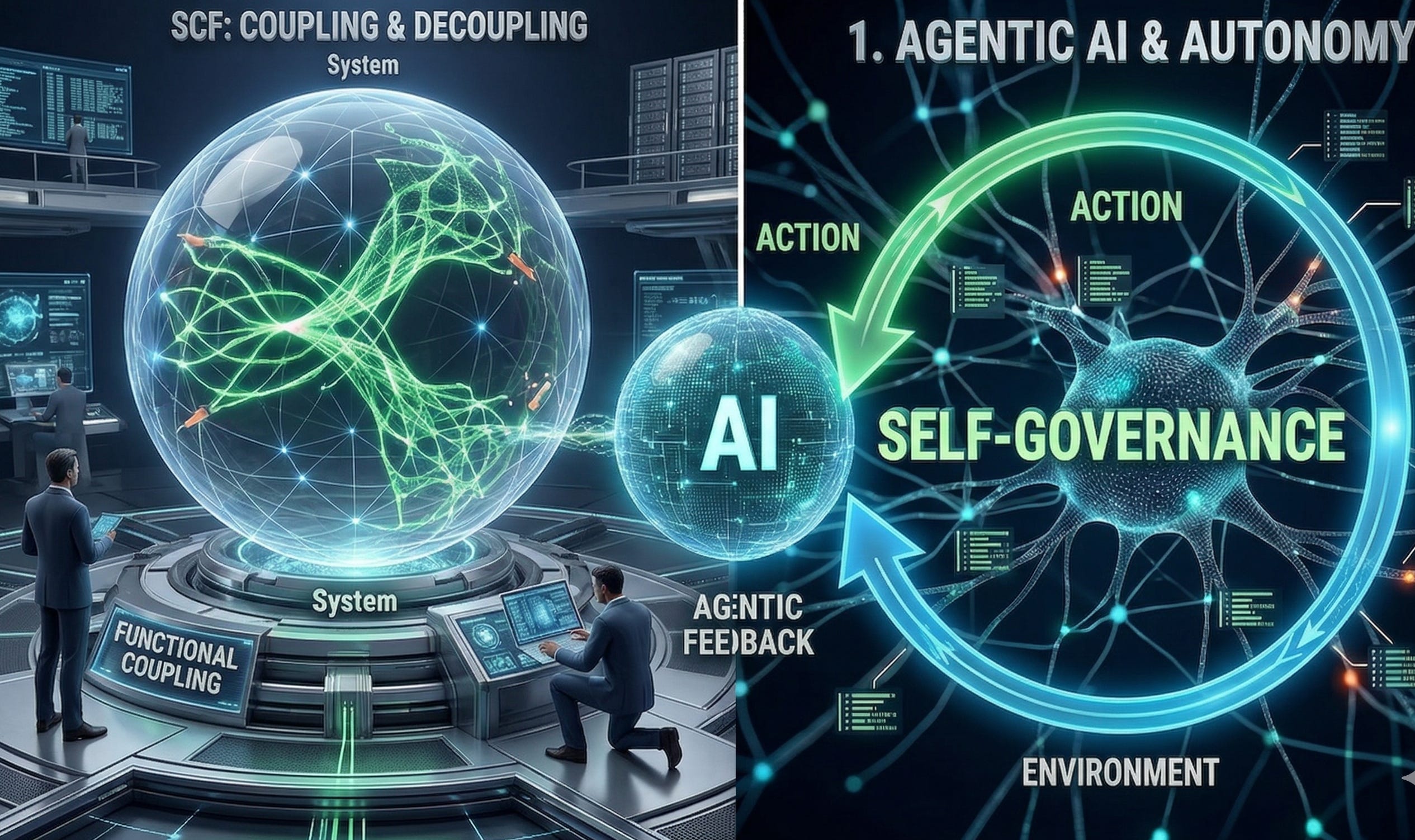
But in modern probabilistic systems, especially machine learning and cognitive systems, this view no longer holds.
Human does not stand outside the system.
Human input is not an external signal.
It enters the system and becomes part of the process itself.
A prompt does not “command” the system. A moment of reflection does not “control” thought. They do something different.
They change the conditions from which the system operates.
And when conditions change, everything that unfolds afterward changes with them.
1.1 The Prompt Illusion
We typically think of prompts as commands:
“Write this.” “Answer that way.”
But in practice, prompts do not function as commands.
They function as initial conditions.
Change one word in a prompt. Add a small constraint. Rephrase the question.
The output can change entirely.
Not because the system “obeys better.” But because the system has entered a different trajectory from the start.
Consider: You ask a language model to “explain quantum entanglement simply.” The model generates a pedagogical explanation, using accessible analogies.
Now change the prompt slightly: “explain quantum entanglement as if teaching a physicist.”
Same topic. Different trajectory. The model now assumes technical background, shifts vocabulary, includes mathematical precision. Not because it “understood the command better,” but because the initial probability distribution shifted.
The prompt did not tell the system what to do. It altered the conditions under which behavior formed.
1.2 Reflection as Perturbation
This does not only happen in AI. It happens in human cognition.
When you pause and ask yourself: “Should I take this approach?” “Is this direction correct?”
You have not created any output yet. But you have done something more important.
You have adjusted the trajectory of thought before it formed.
This is not control from outside. This is a form of intervention occurring within the cognitive system itself. A perturbation happening during formation.
2. Three Types of Perturbation
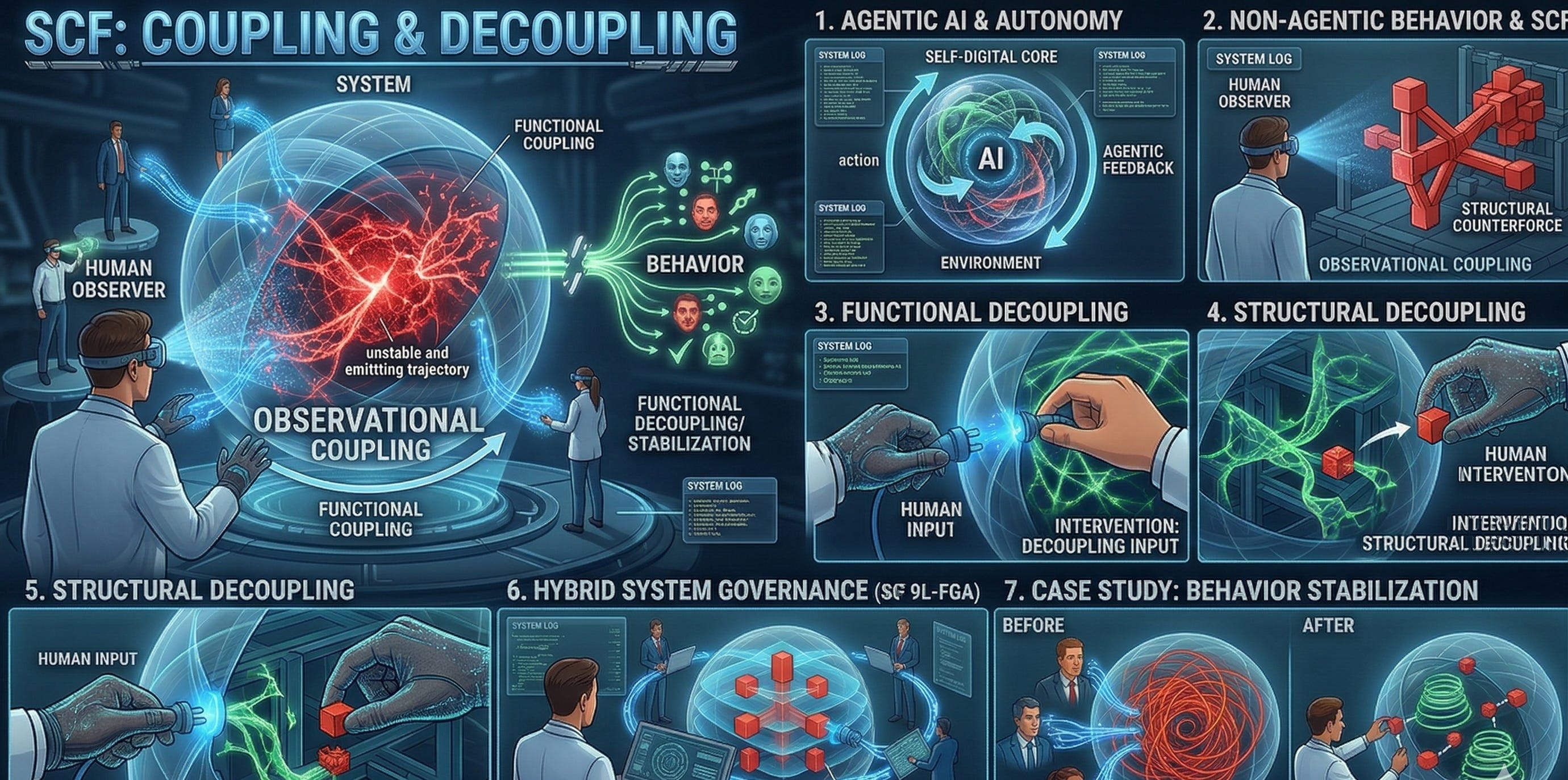
Intervention does not really “fix” the system. It does not replace logic or rewrite results.
It does something more subtle: it creates a perturbation within the trajectory.
And once the trajectory has been perturbed, the system continues moving, but in a different direction.
Not all perturbations are alike. Some disappear quickly. Some accumulate over time. And some, more rarely, can amplify deviations we do not recognize.
https://doi.org/10.5281/zenodo.18876636

2.1 Local Perturbation
This is the most familiar form of intervention.
Small. Short-term. Leaves no lasting trace.
The system maintains its original structure. After the perturbation, it returns to its previous state.
Example: You correct a typo in a sentence. The system adjusts the expression. The sentence becomes more accurate. And then the process continues as if nothing happened.
Here, perturbation does not change long-term trajectory. It creates a small oscillation, and the system absorbs it.
2.2 Structural Perturbation
Not all perturbations disappear. Some are repeated.
And it is precisely that repetition that changes how the system learns and adapts.
When a form of intervention occurs many times:
• It is no longer local perturbation
• It becomes part of reinforcement
Example: You consistently “like” one type of content while ignoring others.
No immediate change occurs. But over time:
• The system begins prioritizing what you choose
• It gradually reduces probability of what you ignore
The recommendation trajectory is no longer what it was initially. It begins to drift.
This is no longer error correction. This is long-term structural change.
2.3 Resonant Perturbation (Most Dangerous)
There is a form of perturbation that is rarely recognized. But it is the most dangerous.
It occurs when perturbation not only acts, but aligns with the system’s existing tendency.
In this case:
• The perturbation is not absorbed
• It does not merely accumulate
• It is amplified
Example: The system already has a slight bias. You make a small adjustment:
• Change a parameter
• Add a constraint
• Emphasize a reasoning direction
The adjustment seems harmless. But it aligns precisely with the existing deviation.
Result: The bias not only increases, it increases faster than expected. And after a certain point, returning to the initial state becomes very difficult.
This is the dangerous point. Because from the outside, intervention still appears as “minor adjustment.” But inside the system, it has become an amplifying force.
Most interventions are designed to correct what is visible. But the most dangerous ones are those that align with what is hidden. They do not fix the system. They accelerate it in the wrong direction.
3. The Real Problem: Systems Not Designed to Absorb Humans
Most systems today are built on an implicit assumption: input is neutral data.
According to this assumption:
• Input is just information
• The system only needs to process and respond
• No “force” accompanies it
But in reality, human input is never neutral.
It always carries: intent, bias, emotion, hidden context.
A prompt is not just words. A choice is not just a signal. They carry direction.
And when they enter the system: they are not processed as data. They become a form of force.
Input, in practice, is not clean data. It is perturbation.
The problem is: most systems are not designed to recognize this. They process every input the same way. And therefore, they do not absorb perturbation. They accumulate it.
3.1 The Rigidity Regime
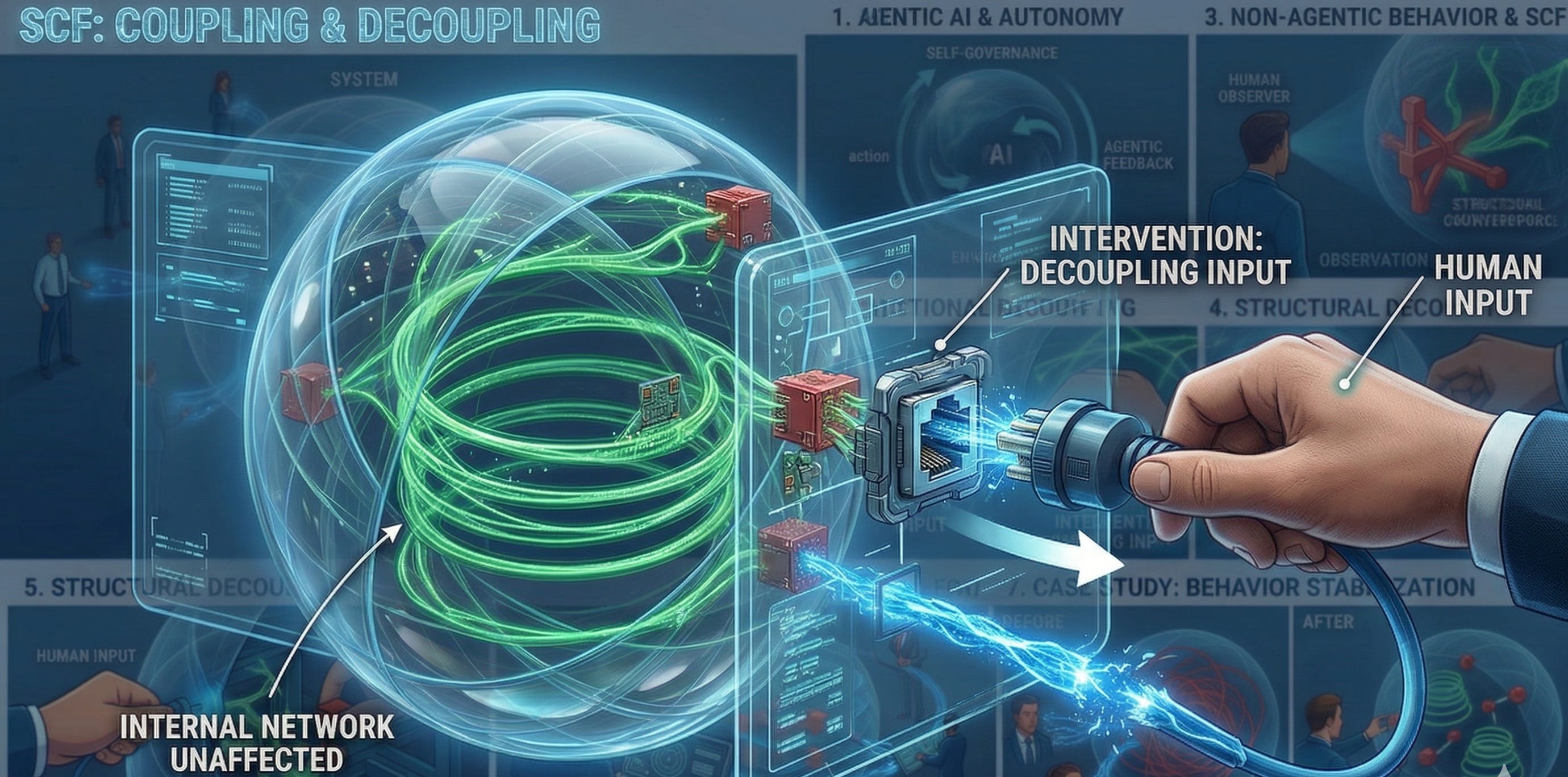
In the Structural Counterforce Framework, probabilistic systems do not just change with each input step. They change through a longer process:
• Reinforcement accumulates
• Trajectory gradually stabilizes
• Capacity for change decreases
When this process continues long enough, the system enters a state called: rigidity regime.
In this state, the system becomes:
• More rigid
• Harder to change
• Less responsive to perturbation
What could previously deflect trajectory, a different prompt, a new signal, a small adjustment, now lacks sufficient force.
The system still functions. But it is no longer flexible.
At this stage, intervention no longer plays its former role. Instead of adjusting, deflecting, or opening new directions, it begins to have a different effect: it reinforces what already exists.
Each intervention: does not change the system, but makes it more stable along its current trajectory.
Result: The system is not just rigid. It becomes harder to save over time.
And here is the paradox: more intervention does not make the system more flexible, it makes it rigid faster.
Most systems fail not because they ignore intervention. But because they are not designed to absorb it. So every intervention leaves a trace. And over time, those traces turn flexibility into rigidity.
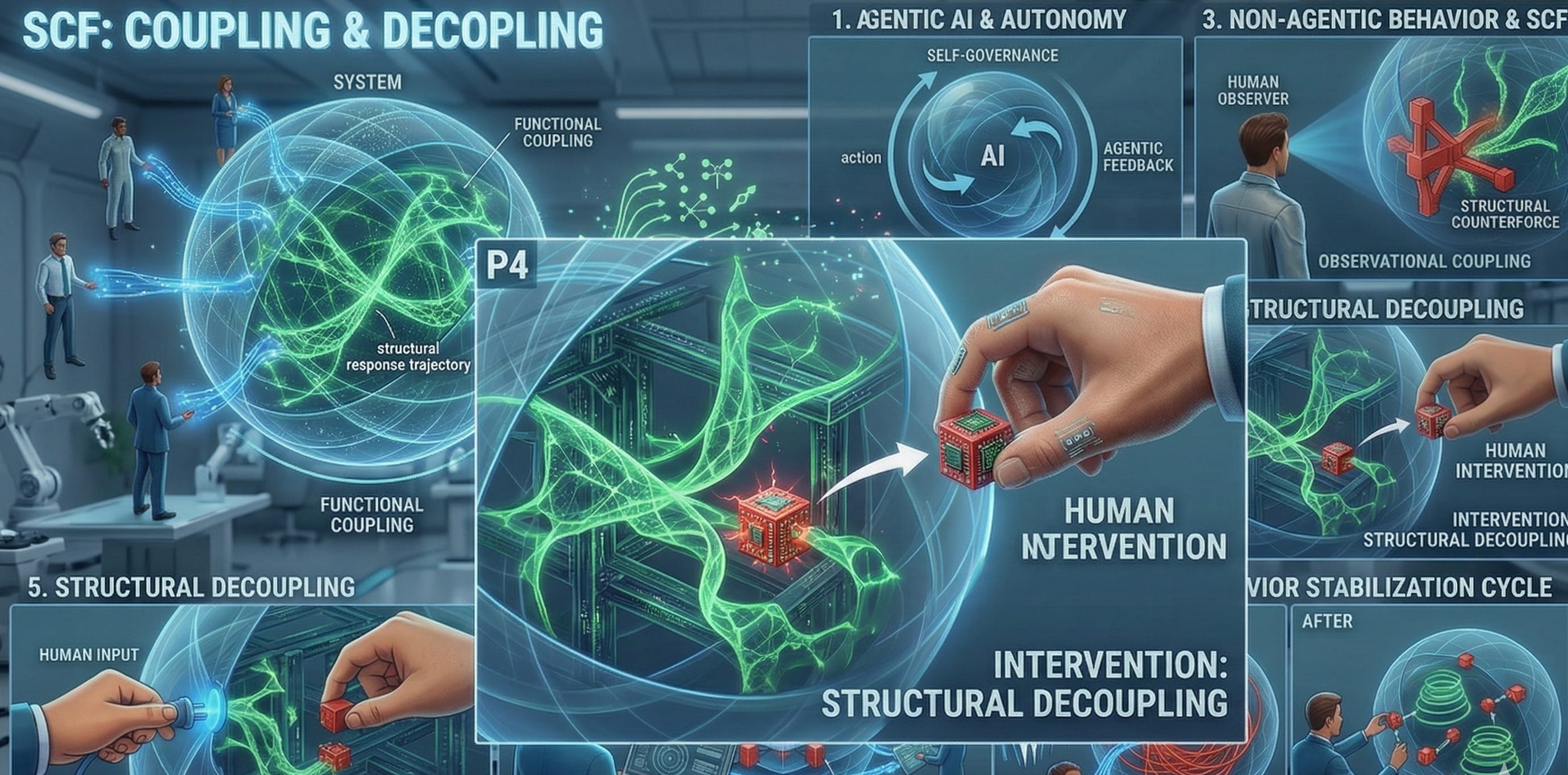
4. Coupling: When Human Becomes Part of the System
We often use the word “interaction” to describe the relationship between human and system.
User inputs. System responds. A back-and-forth sequence that can stop at any moment.
But that is not what is actually happening.
Interaction can be separated. Coupling cannot.
Interaction: You stop inputting. System stops responding. Two sides become independent again.
Coupling is different. It is not just exchange. It is bidirectional dependence.
Once coupling forms:
• Human state influences system
• System state simultaneously influences human back
No clear boundary between the two sides remains. Only continuous flow.
4.1 The Bidirectional Loop
When coupling occurs, a loop begins to form.
Human → System
The prompt you write, the behavior you repeat, the choices you prioritize, all become: signals, conditions, perturbations shaping the system’s trajectory.
System → Human
But the flow does not stop there. The system also acts back:
• It offers suggestions
• It shapes how you see problems
• It limits the choices you perceive as “possible”
You are not just using the system. You begin thinking within the space the system creates.
Closed Cognitive Loop
When these two flows connect:
• Human shapes system
• System shapes human
A closed loop emerges. No clear starting point. No clear ending point. Only repetition, each time with slight changes.
4.2 The Hybrid System
When coupling is weak: human can still separate from system, system can still be viewed as tool.
But when coupling becomes strong:
• Human decisions are shaped by system
• System behavior is shaped by human
At this point, a transformation occurs. No longer: “controller” and “controlled.” Only: a hybrid cognitive system.
A system where:
• Boundary between human and system becomes blurred
• Trajectory is formed from both sides
• Neither side is truly independent anymore
This is not the future. It has already happened. And once it has, the question is no longer: “Who is controlling the system?” But: “Where is this system, with both human and AI inside, going?”
We do not simply interact with systems. We become coupled to them. And once coupling happens, there is no external observer left, only a system that includes us inside its own dynamics.
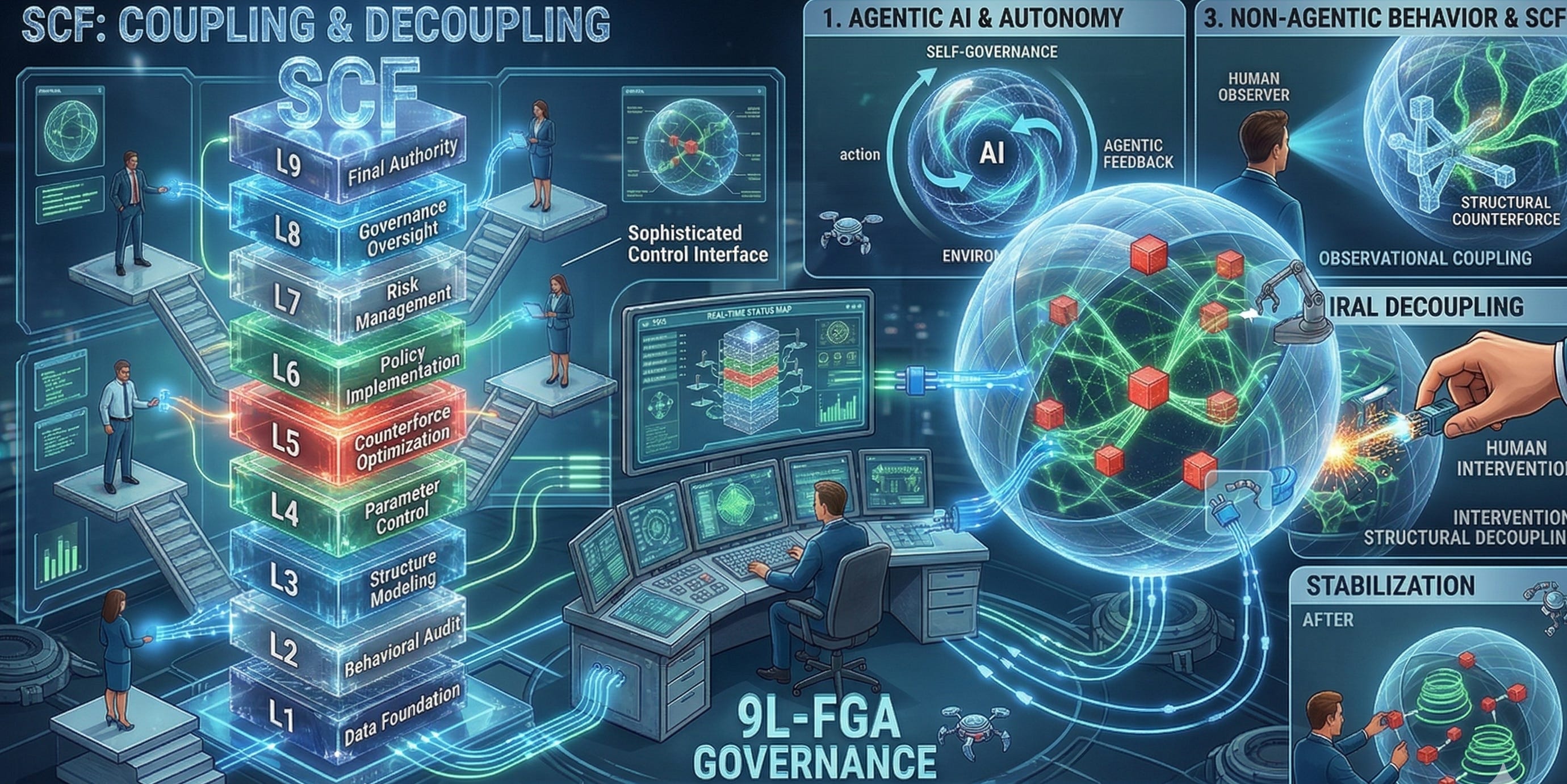
5. The Execution Boundary Revisited
In Article 12, the execution boundary was introduced as a point of transition. Not a rule. Not a fixed threshold. But a condition of the system.
It is the limit beyond which intervention no longer stands outside the system, but becomes part of the trajectory itself.
Before this boundary:
• System still retains capacity to change direction
• Perturbation can still deflect trajectory
After this boundary:
• Trajectory has stabilized sufficiently
• System begins resisting change
Importantly: the execution boundary does not lie in behavior. It lies in the system’s capacity to still change that behavior.
When the system crosses this boundary:
Trajectory no longer deflects easily. Reinforcement has accumulated long enough. Alternative directions have been eliminated.
Intervention still exists. But its role changes completely.
It no longer deflects trajectory or opens new possibilities. It becomes the next step in that trajectory itself.
No longer control. Only participation.
A new prompt no longer changes direction. It is absorbed and becomes part of the existing flow. An attempt to “adjust” is no longer adjustment. It only makes the trajectory continue in a different manner.
This is the point many systems fail to recognize. They continue intervening. Intensifying correction. Adding constraints.
But all they are doing is becoming part of the problem.
Most systems believe they are still in control long after they have crossed the boundary. But beyond that point, intervention no longer changes the system. It only becomes part of what the system is already doing.
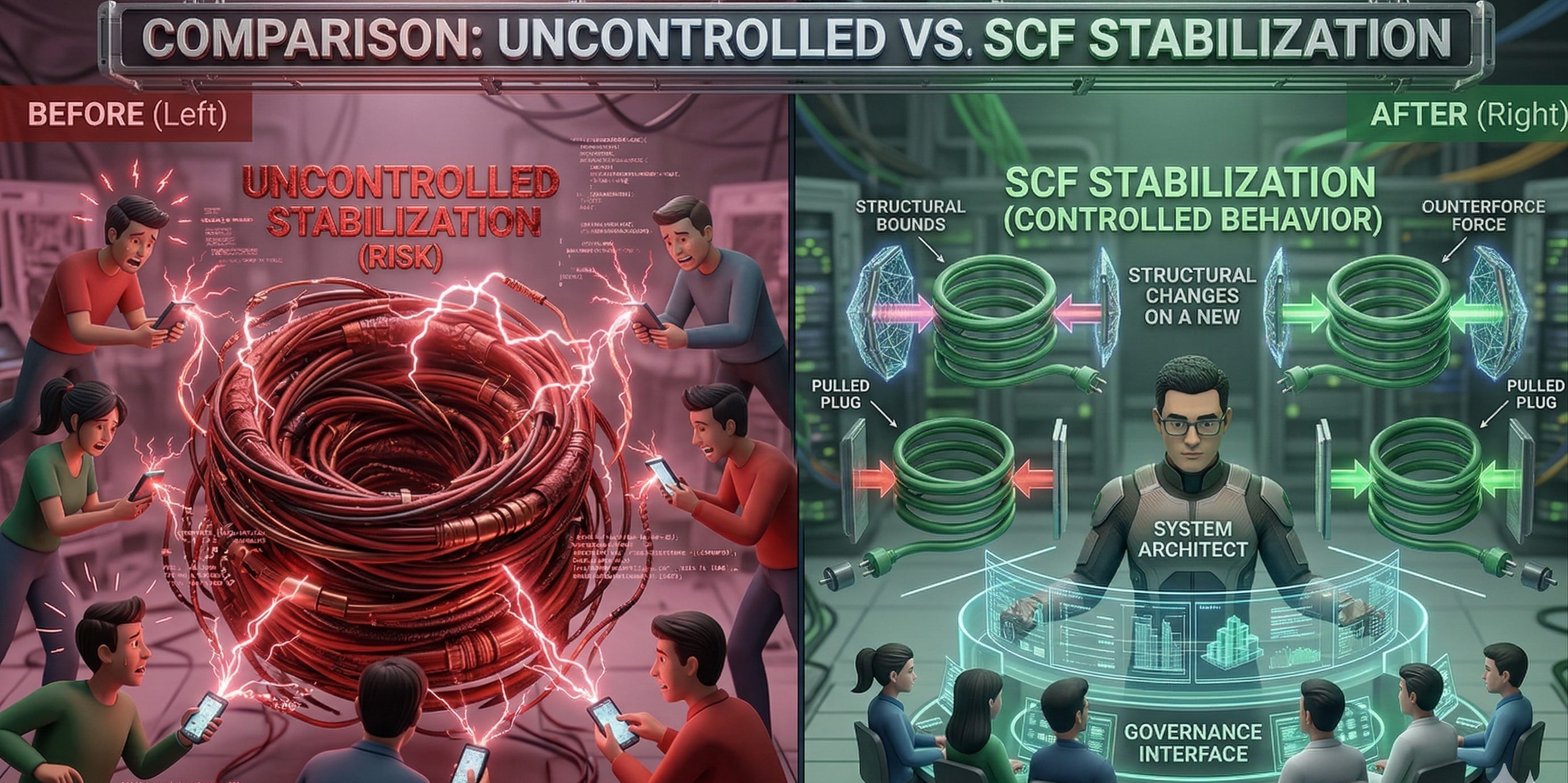
6. Governance Must Evolve
Current governance is not wrong. But it is not enough.
When human intervention becomes internal perturbation, and coupling between human and system begins forming, governance is no longer just about controlling behavior.
It becomes a question of system dynamics.
Not just: what the system does. But: what the system is becoming.
6.1 Current Governance Axis (Behavioral)
This is the axis most systems today operate on.
Goal: Control output. Ensure correct behavior.
Method: Filter output. Fix results. Inject correction.
This axis works well. In many cases, it is sufficient.
But it has a structural limit: it only acts after trajectory has already formed.
It addresses: what the system has done. But not: what the system is becoming.
6.2 New Governance Axis (Dynamical)
When intervention is no longer external signal but becomes part of dynamics, governance must shift into the process itself.
Goal: Manage trajectory formation. Manage hybrid nature of system (human-system coupling).
This cannot be achieved through rules alone. Not just through constraints or policies.
It requires design at dynamics level:
• Capacity to absorb perturbation
• Control of coupling strength
• Management of trajectory dynamics before stabilization
This is no longer behavior control. This is managing the conditions under which behavior can form.
6.3 Both Axes Must Coexist
This is the most easily misunderstood point. The new axis does not replace the old one.
Axis 1 - Behavioral governance: Addresses output. Necessary. Always exists.
Axis 2 - Dynamical governance: Addresses formation. Foundational. Increasingly critical as systems become complex.
When systems are simple: Axis 1 may suffice.
But when systems become hybrid, where human and system together create trajectory, Axis 2 becomes mandatory.
Not to replace control. But to do what control cannot: intervene before the system locks itself into a trajectory.
Most governance systems are designed to control what a system does. But the real problem begins earlier. At the point where the system is no longer just acting, but becoming something else through its interaction with us.
7. When There Is No Outside
Human was never outside the system.
We were always inside it, as signals, as perturbations, as part of the trajectory itself.
What we called “intervention” was never truly external. It was always a point of entry into the system’s dynamics.
And once we see it this way, a shift becomes unavoidable.
The question is no longer: How do we control AI? Because control assumes distance. And distance no longer exists.
The real question becomes:
How do we design systems that can survive our presence inside them?
Not systems that obey. Not systems that resist.
But systems that can remain stable while being continuously perturbed by the humans within them.
In the next article, we follow that shift.
If intervention is internal, and coupling creates hybrid systems, then responsibility is no longer isolated.
It is no longer located in the human or in the system.
It emerges from the structure that binds them.
If no single agent holds control, then how is responsibility distributed?
And more importantly: what invisible forces are already shaping it before any decision is made?
⬅ The Execution Boundary | 🏠 How to Read | Incentives➡
The Structural Counterforce Framework is still unfolding.
Subscribe to receive the next chapter directly.