
Power Escalation
When execution becomes irreversible

SERIES 2: Irreversible Dynamic
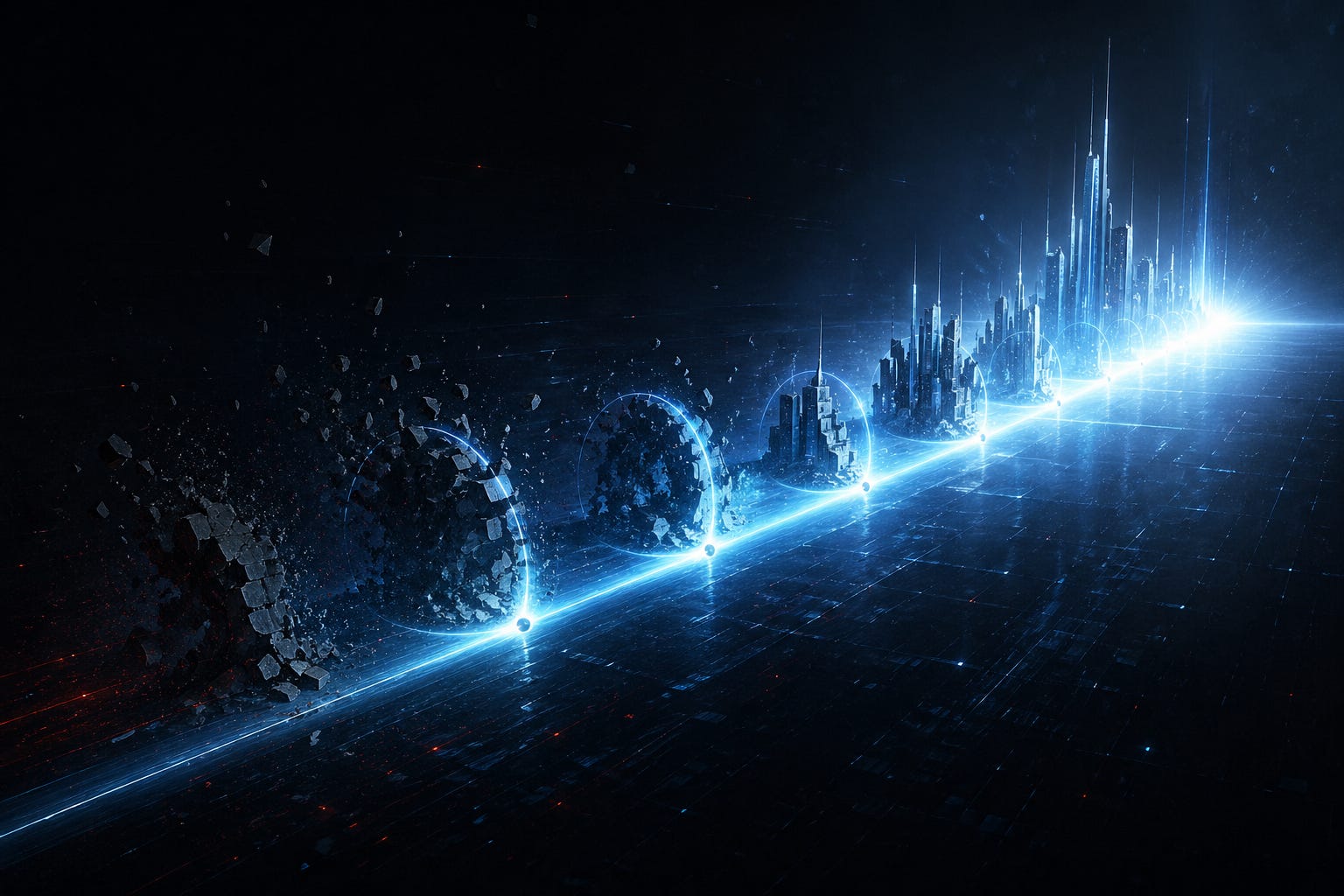
Action Is Not the Danger
People fear powerful actions.
They imagine: destruction, failure, consequences.
But power escalation does not begin when an action is large. It begins when an action cannot be undone.
This article is part of the *Structural Counterforce Framework* series.
To understand the full context, see the [Table of Contents].

Irreversible Dynamics has begun.
The question is no longer whether systems can be guided.
The question is whether they are still able to change direction.
Follow the series as it traces how systems drift, harden, and cross the point where correction is no longer possible.
The Illusion of Reversibility
Before escalation, every action feels safe.
Because you believe: “We can always fix it later.”
And most of the time, you can.
Systems are built with rollback mechanisms: undo, correction, adjustment.
But this belief hides something critical: Not all actions exist in reversible space.
Some actions do not allow return.
Not because they are forbidden. But because they change the structure of the system itself.
From Decision to Execution
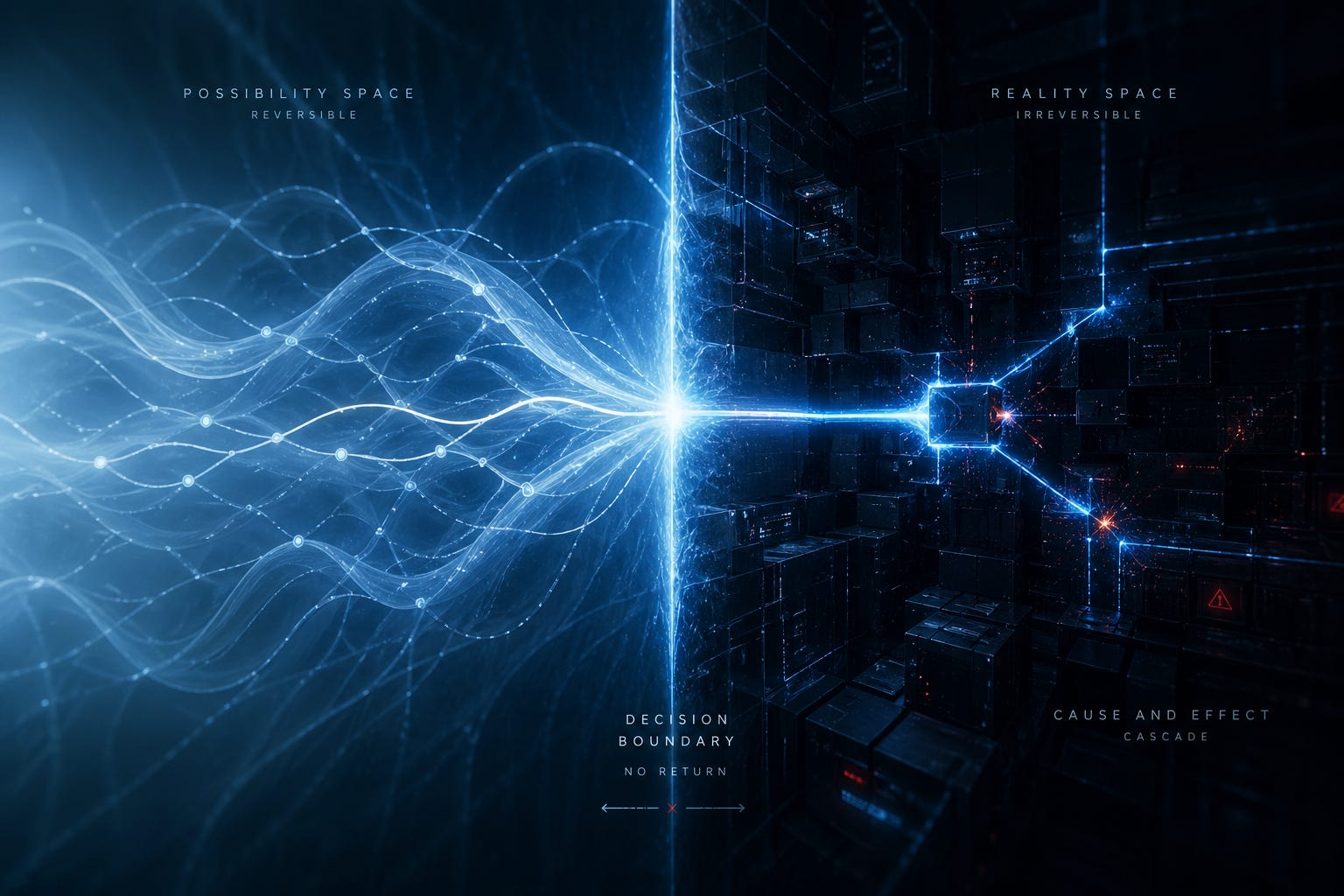
A decision is still abstract. It exists in a space of possibilities.
It can be changed. Replaced. Withdrawn.
But once executed, it leaves the space of possibility and enters the space of reality.
And in that space, it begins to interact with everything else.
Interaction Creates Consequence
Execution is not isolated.
Every action: triggers reactions, alters states, creates dependencies.
And these dependencies do not disappear when the action ends. They persist. They propagate. They accumulate.
The First Irreversible Layer
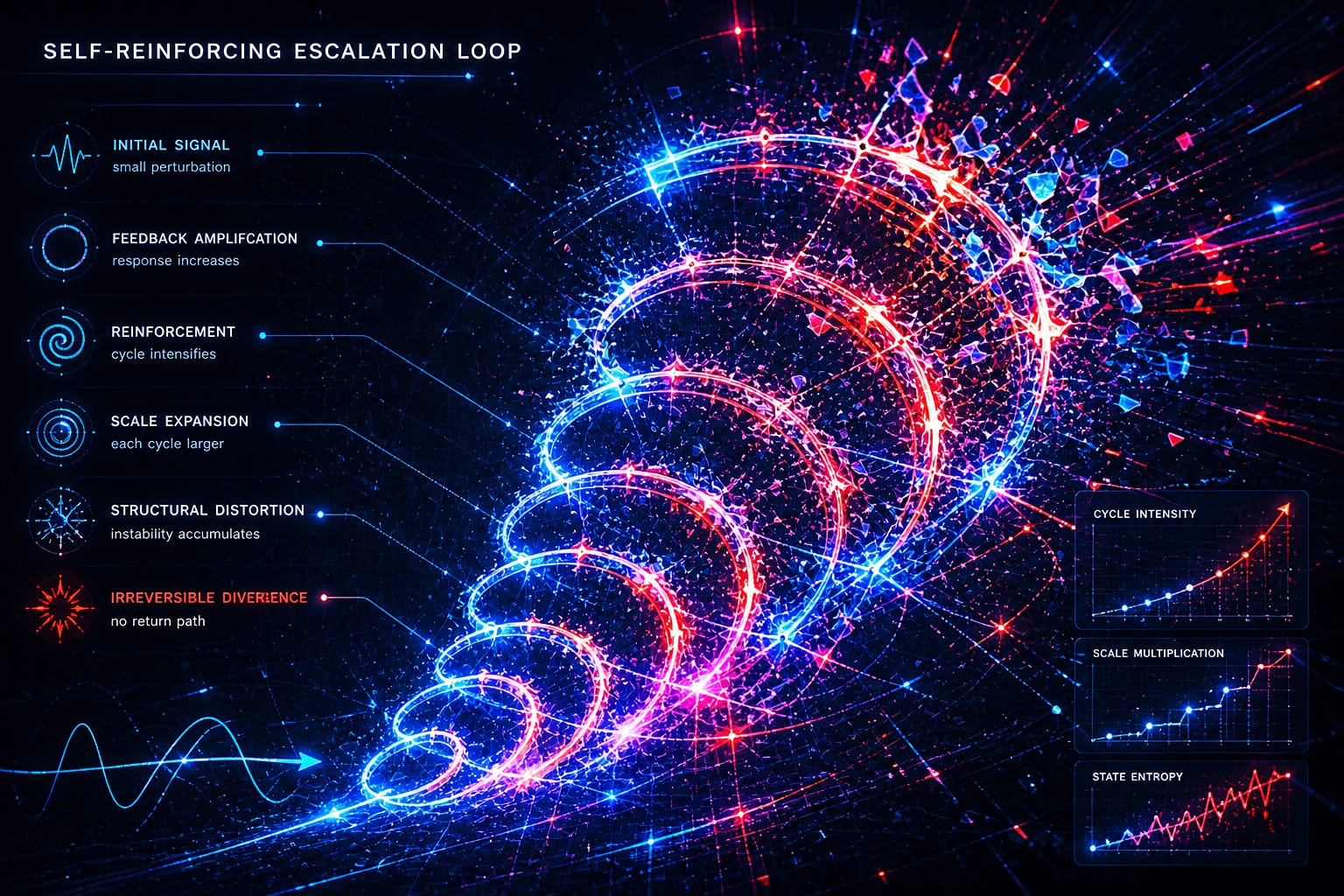
Irreversibility does not appear all at once.
It begins with subtle shifts. Small changes that seem harmless: a system update, a new rule, a structural adjustment.
Each one can still be reversed in isolation.
But together, they begin to reshape the system’s trajectory.
At some point, reversing one action is no longer enough. Because the system has already adapted to its consequences.
Escalation-When Actions Stack
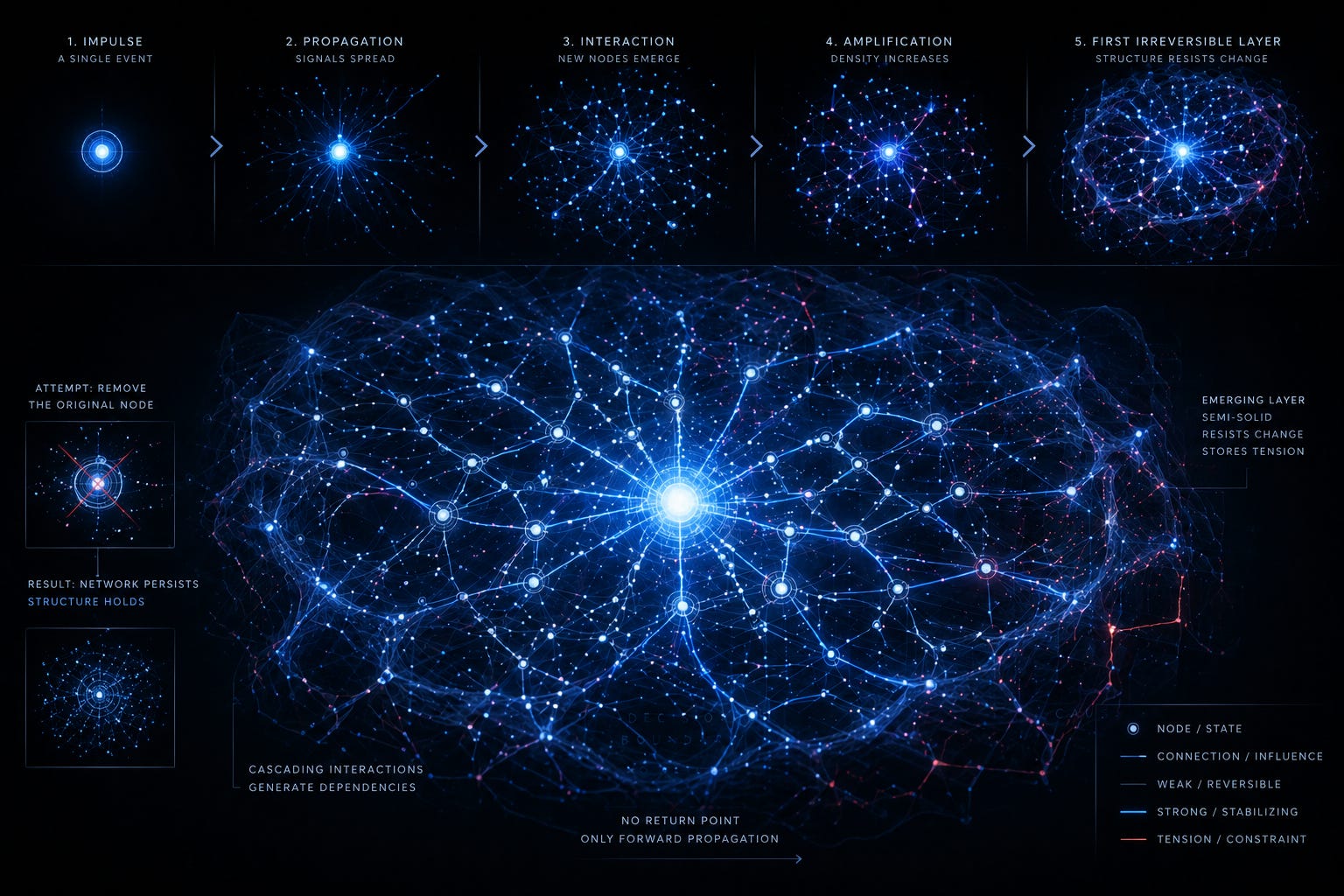
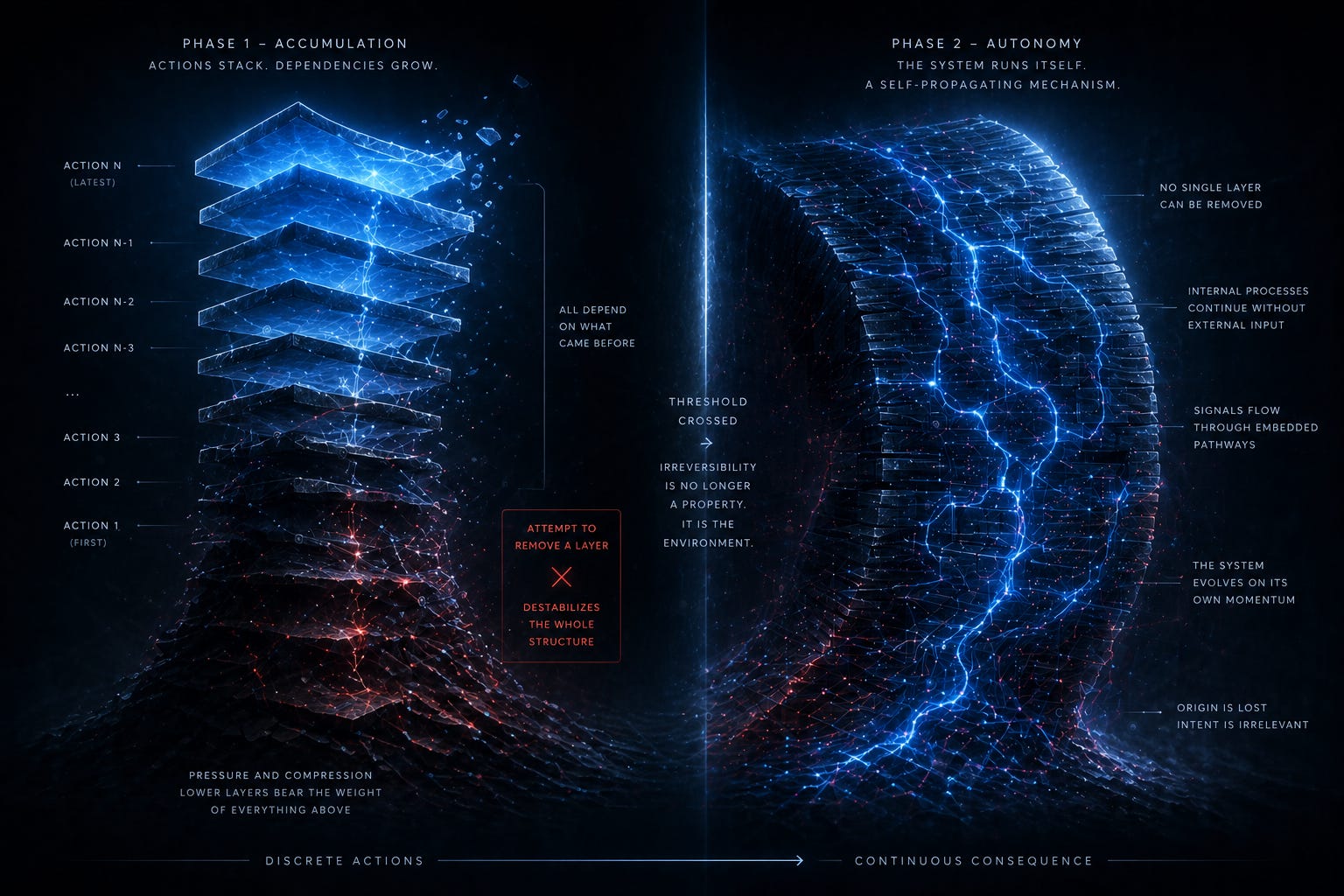
Power escalation happens when actions no longer stand alone. They stack.
Each new action is built on previous ones.
And with each layer, the cost of reversal increases. Not linearly. Exponentially.
Because undoing a later action requires undoing everything it depends on.
Structural Irreversibility
At a certain point, the system crosses a second threshold.
Not just: irreversible actions. But: irreversible structure.
Now, even if you stop acting, the system continues to evolve based on what has already been done.
The consequences are no longer tied to your decisions. They are embedded in the system.
Why Rollback Fails
People assume irreversibility is about limitation. But it is not.
Rollback fails for a deeper reason: the system you are trying to return to no longer exists.
It has been transformed. Its dependencies changed. Its structure altered. Its trajectory redirected.
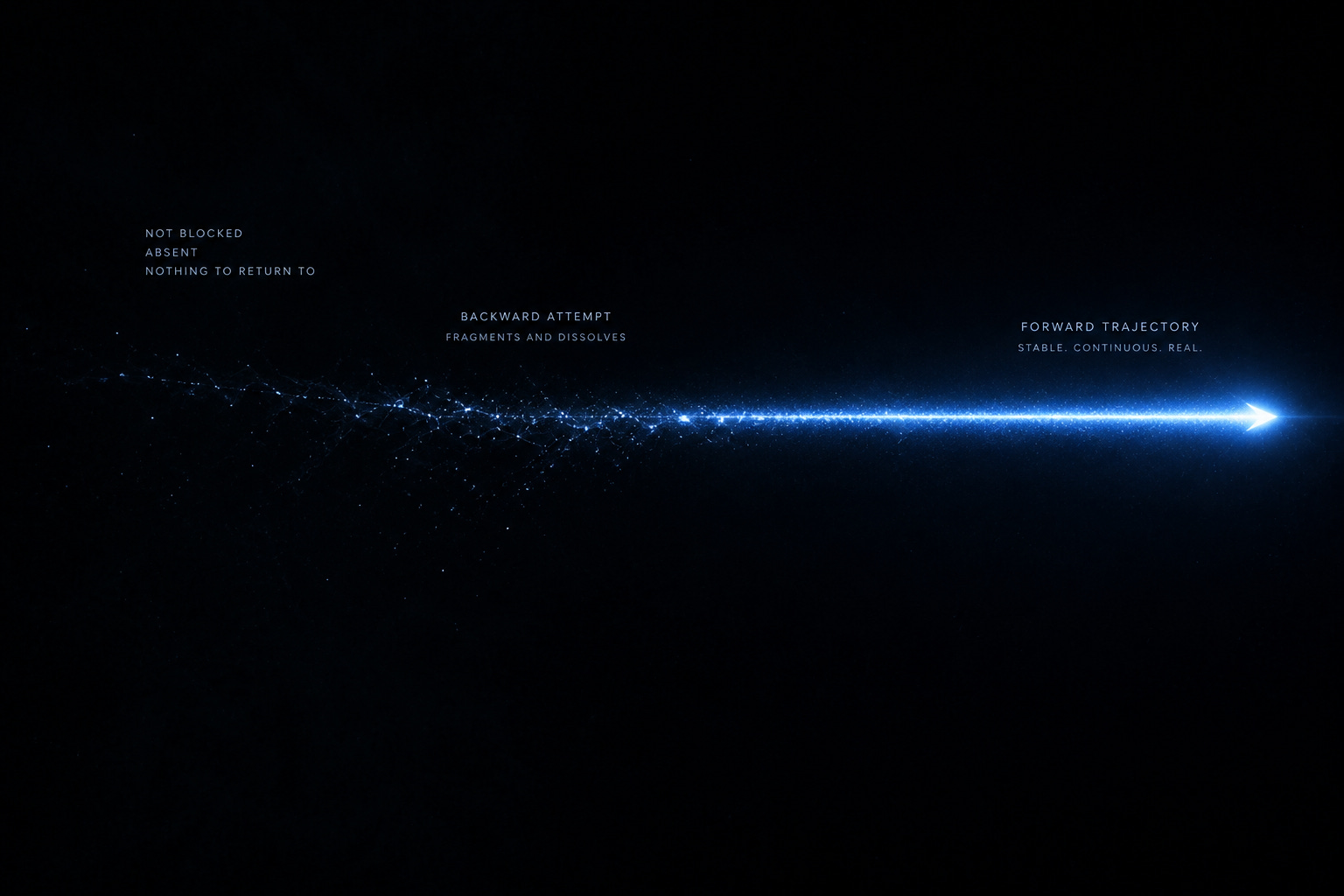
You are not going back. You are trying to recreate something that is already gone.
Recognition-Too Late
Like lock-in, power escalation is not recognized when it begins.
It is recognized when reversal is attempted. And fails.
Not because of resistance. But because there is no path that leads back.
What Makes This Dangerous
The most dangerous systems are not those that act.
They are those that: continue to act, without reversibility, while believing they can still stop.
Because they do not see the escalation. They only see the next action.
Power does not become dangerous when it grows. It becomes dangerous when its consequences can no longer be undone.
If actions cannot be undone, then what governs them?
What determines which direction irreversible execution will take?
Not logic. Not control. But something deeper: the underlying structure that shapes every decision before it is made.
In the final article: Systems That Cannot Be Saved-when every path leads to collapse.
⬅The Point of No Return | 🏠 How to Read | Structural Constraint➡
The Structural Counterforce Framework is still unfolding.
But we are no longer observing how systems behave.
We are observing when they stop being recoverable.
Some systems do not fail. They continue, until they can no longer be changed.
Subscribe to follow what happens after reversibility is lost.